




|
|
|
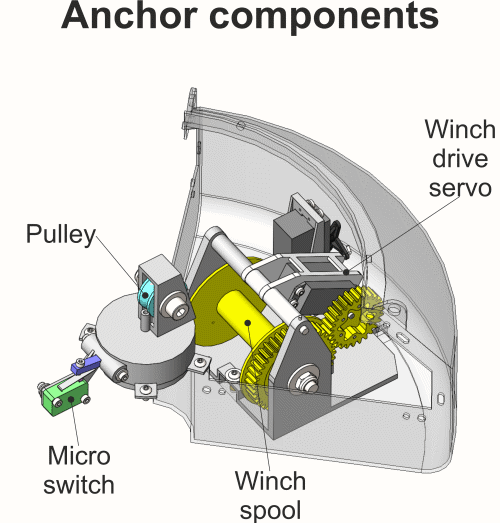
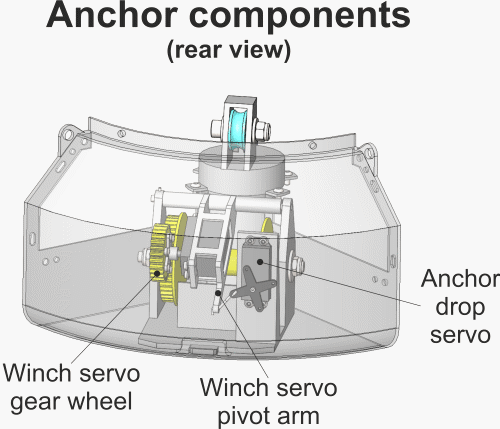
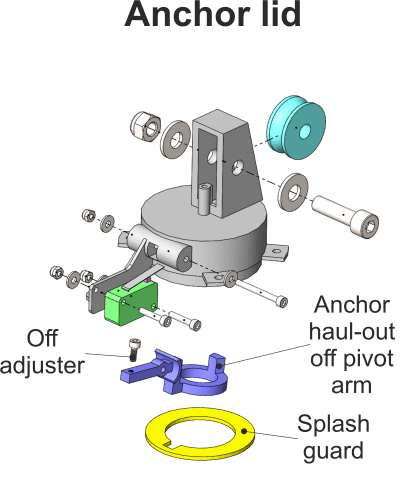
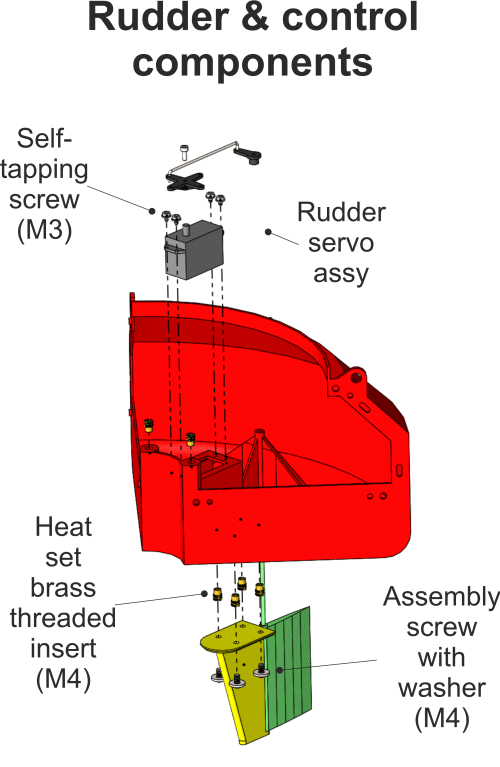
Robin Gray is up to Version 3 of his moveable mark, ideal for RC sailing. The Broads club (§1) decided to build one. §1 The club site does not yet have an https certificate. Your browser may complain.... Sorry about that! Currently there seem to be two types of moveable mark available to the RC course setter. When motored out to the desired spot, one type uses GPS to hold position. The other type drops a tethered weight. Robin's design is the less costly 3D-printed "drop and raise an anchor" type. Robin provides a PDF, "Parts list and information Mark v3 Jan 2026". This page gives some additional information that others might find helpful.
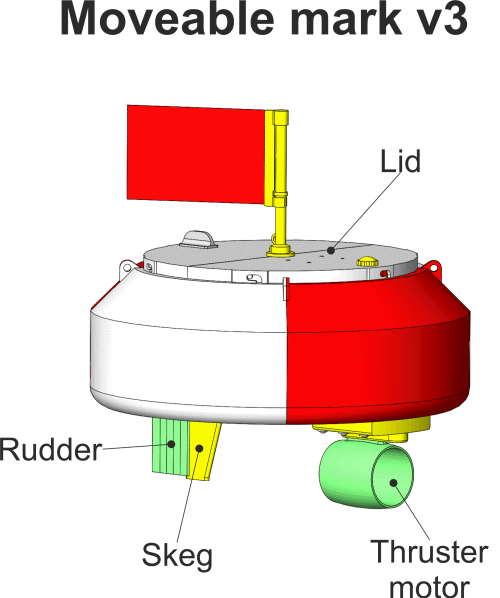
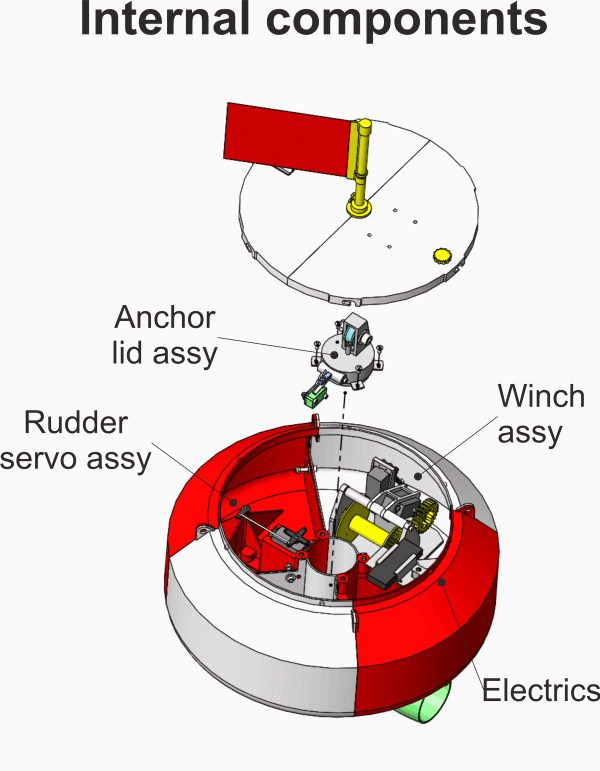
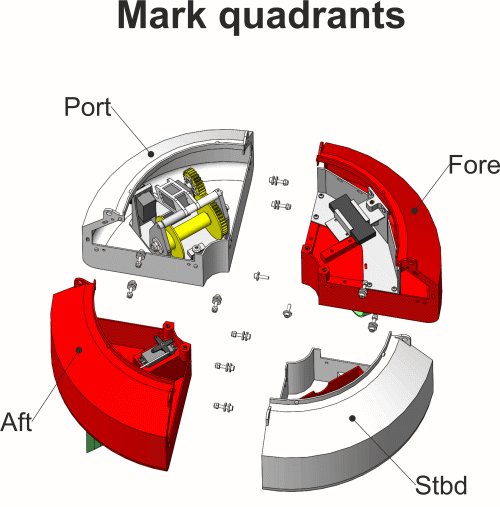
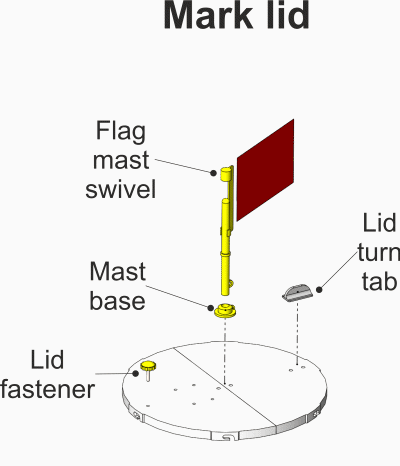
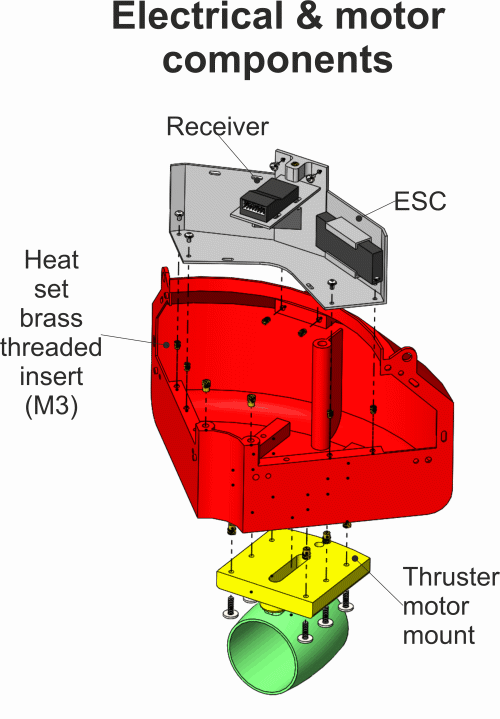
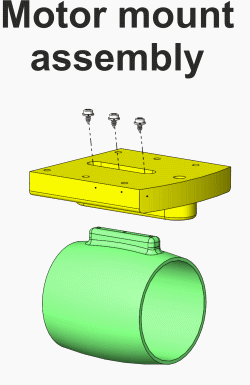
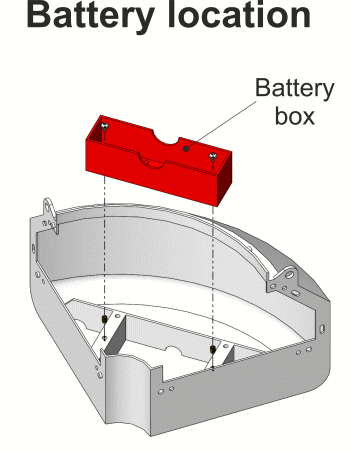
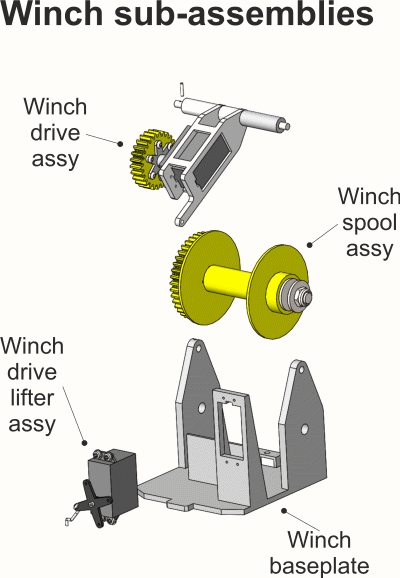
Original overview and 3D image renders
3D printingRobin designed the mark using FreeCAD and provides resulting STL files in a downloadable ZIP file. We decided upon a slightly different design for the gear wheel of the winch assembly, details below. Editing an STL file is generally an awkward and unrewarding experience. We use SolidWorks, and although it does a reasonable job of turning an STL file into a parameterised SLDPRT design file, it still isn't perfect. Robin kindly provided the FreeCAD FCStd file. We installed and ran FreeCAD, exported the part as a STEP file, imported the STEP into SolidWorks, made the change, and exported the revised STL. About as good as it gets! We printed the STLs with a Prusa XL using eSun PLA Plus filament. Some careful positioning and editing of organic supports in Prusa Slicer allowed successful printing of the mark's considerable overhangs with minimal support filament.
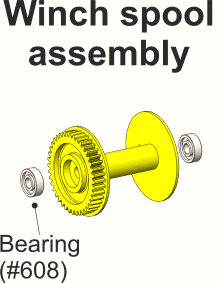
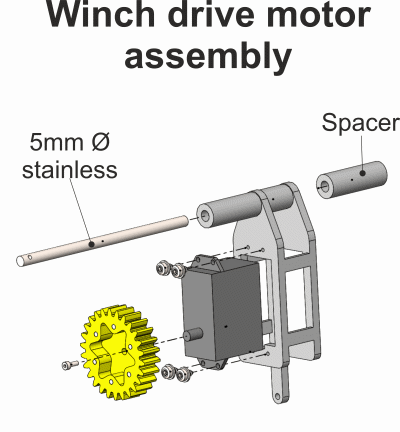
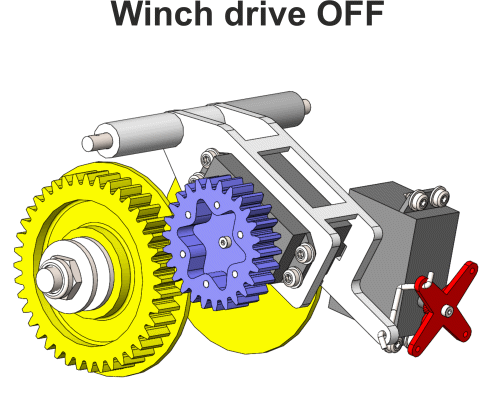
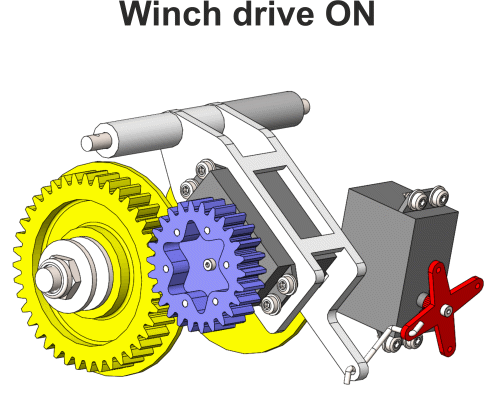
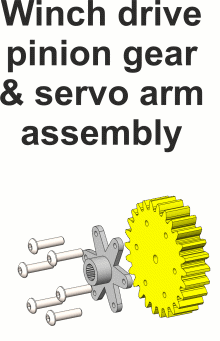
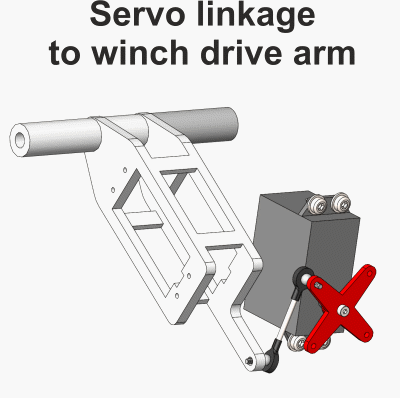
AssemblyWe were not able to print the splines on the pinion gear satisfactorily, so redesigned the pinion without its 3D printed servo arm and instead bolted an original servo arm to it, left-hand render as below. We also couldn't bend a piece of wire to link the raising and lowering servo to the winch drive arm satisfactorily, so linked it with ball links instead, right-hand render as below.
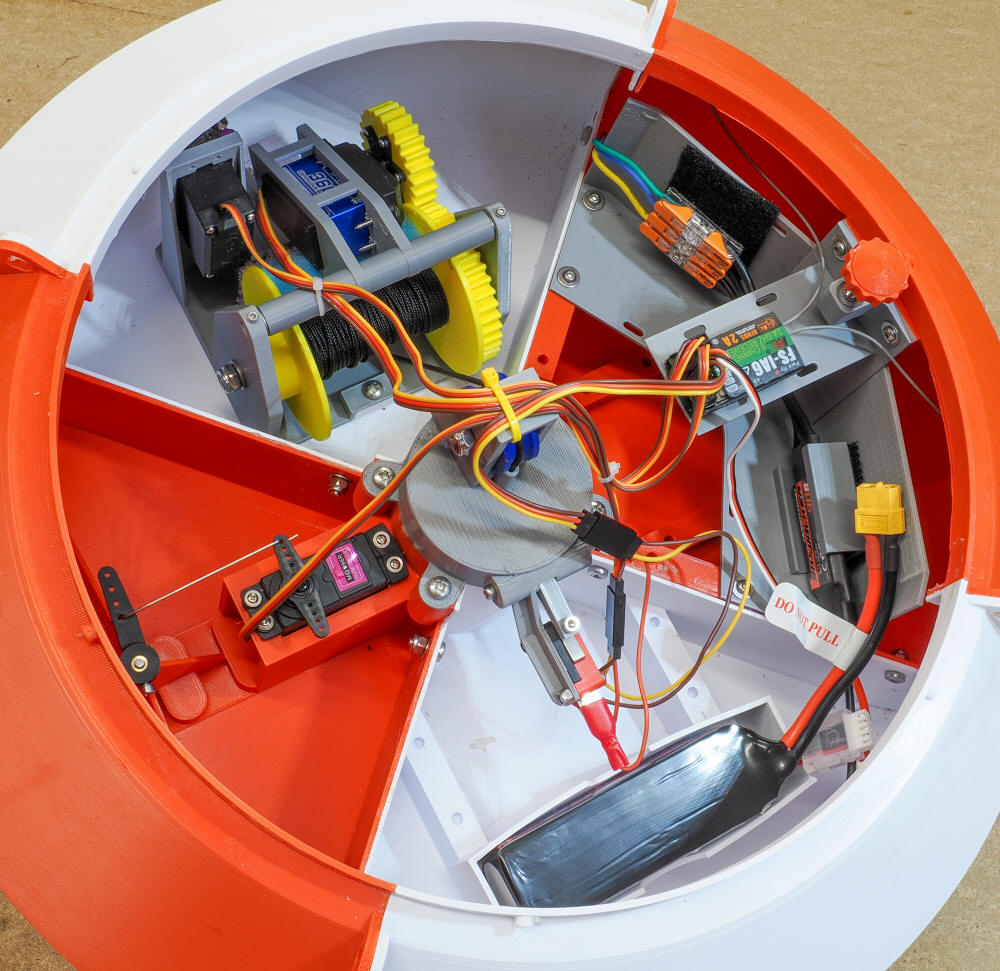
ResultThe internal wiring of the assembled mark is shown in the photo below.
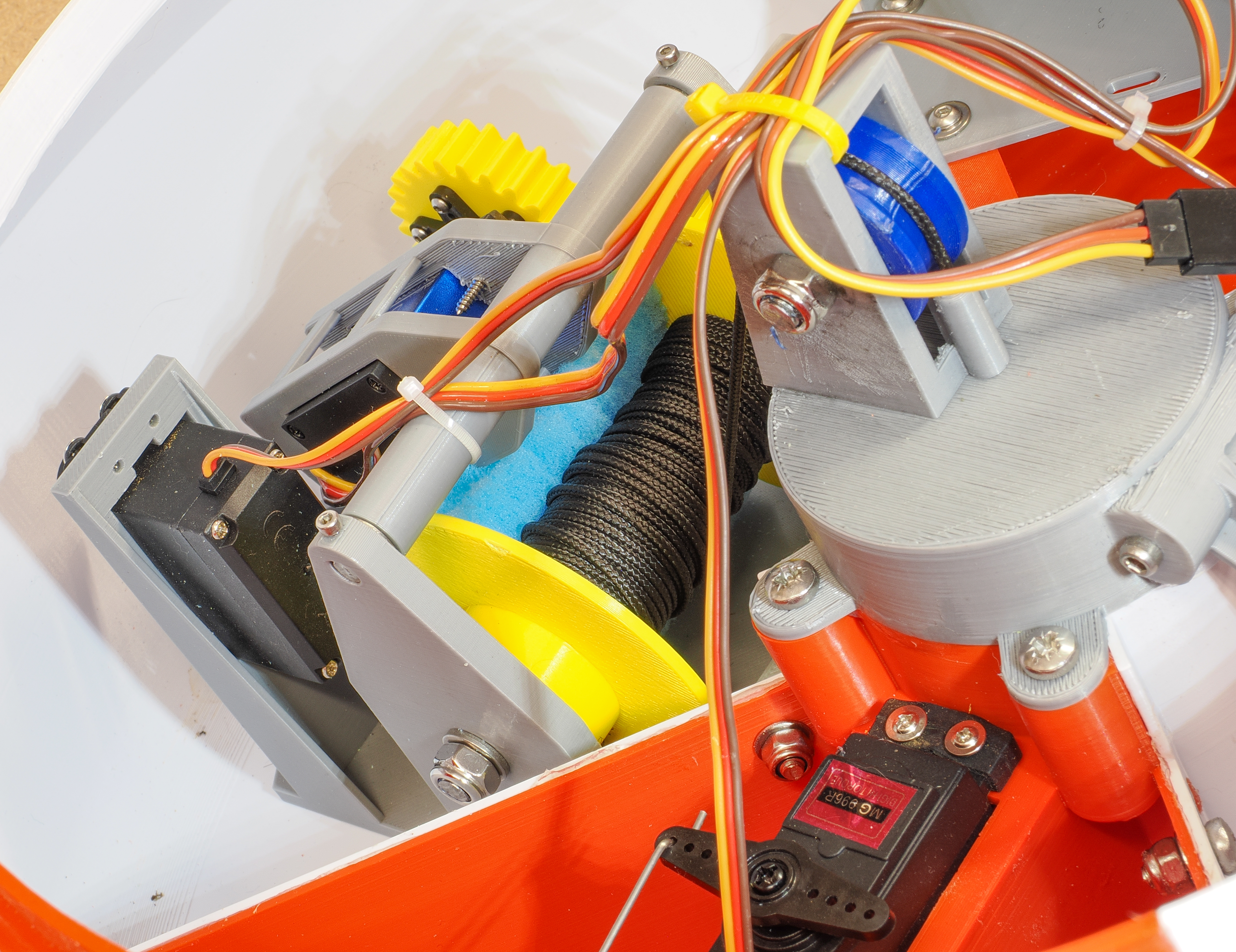
A close-up of the winch assembly, showing the kitchen washing-up sponge, blue, riding on the spool of anchor line to keep it neatly wound and not too wet. It works a treat.
|
|
©2025 Lester Gilbert |